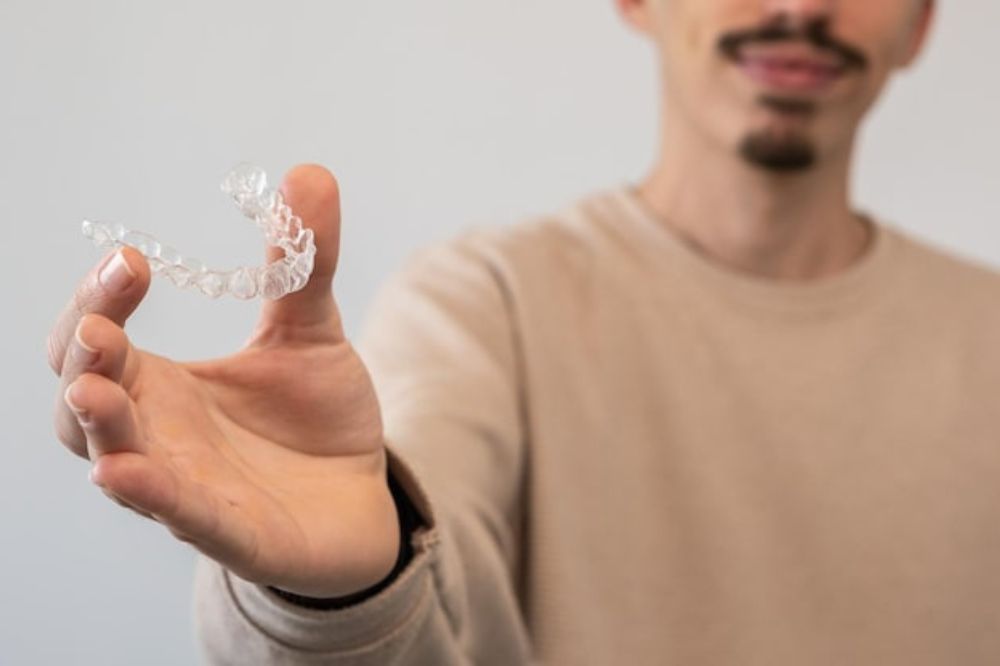
If you have noticed that your teeth are not as straight as they were the day your braces came off, you are not alone. Many people experience a small amount of movement in their smile as the years go by. In many cases, retainers can help nudge teeth back into their correct positions, but this only works if the shifting is very minor. If your teeth have moved significantly, a retainer might feel too tight or may not fit at all, meaning you might need a different kind of help from a professional.
How do retainers work?
A retainer is an orthodontic appliance that prevents your teeth from moving after treatment. Think of it as a special “seat belt” for your smile. The main purpose behind this is to stabilize a person’s teeth while the surrounding bone and gums become strong.
Because teeth have a natural memory, they often want to drift back to where they used to be. This is called “relapse.” If you catch this movement early enough, perhaps you only skipped wearing your device for a week or two, restarting your routine might be enough to move them back. However, you should never force a retainer onto your teeth if it causes sharp pain, as this can damage the roots of your teeth.
When can retainers fix shifting teeth?
Whether or not a retainer can correct movement depends on how much the teeth have drifted. If the gap or overlap is tiny, the slight pressure of the plastic or wire might be enough to act as a “mini-brace.”
The “Slight Pressure” Rule
If you can still get the device over your teeth and it just feels a little snug, it is likely doing its job. By wearing it consistently for a few days, that snug feeling usually goes away as the teeth align with the mould. Many people ask, Can retainers fix shifting teeth? And the answer is yes, provided the shift is measured in fractions of a millimeter.
When the shift is too much
If you try to put your device in and it pops out or leaves a large gap between the plastic and your teeth, it is likely too late for that specific retainer. At this point, the teeth have moved beyond the shape of the mould. In this situation, visiting an orthodontist is the safest move to avoid hurting your mouth.
Do retainers work after teeth move back?
A common question for those who haven’t worn their gear in months is: Do retainers work after teeth move back? Unfortunately, once teeth have moved significantly, an old retainer usually cannot push them back. Retainers are passive tools, meaning they are built to hold a shape, not necessarily to create a new one.
If you find yourself in this position, an orthodontist might suggest a “spring retainer” or a short course of clear aligners. These are active tools designed to move teeth back into the perfect row. Waiting too long to seek help often means the shifting will get worse, as teeth tend to move more as we age.
Tips for keeping your smile straight
- Wear it as directed: Most people need to wear their device every night for life.
- Keep it clean: Use cool water and a gentle soap so the shape doesn’t warp.
- Check the fit: If it starts feeling tight, it’s a sign you aren’t wearing it enough.
- Bring it to check-ups: Always bring your retainer to your appointments to make sure it still fits correctly.
A lifelong commitment to your smile
Your smile is an investment that deserves protection. At All About Smiles Ortho, we want to help you keep that beautiful result you worked so hard for. Whether you need a new set of retainers or just a quick check-up to see how your teeth are doing, our team is here to provide expert guidance in a friendly environment. We believe everyone deserves to feel confident in their smile at every age. Keeping your teeth aligned is about more than just looks; it is about maintaining a healthy bite for years to come.
Contact us today to schedule your consultation and keep your smile on the right track!
Frequently Asked Questions
Is it normal for my teeth to move even if I wear my retainer?
A very tiny amount of movement can be normal as you age. However, if you see a noticeable gap or overlap, it usually means the device isn’t being worn often enough or no longer fits properly.
Why does my retainer feel tight in the morning?
This usually happens because your teeth tried to shift slightly during the day. When you put the device in at night, it pushes them back into place. If it feels tight, it is a sign you should wear it more often.
Can I fix a gap in my teeth with an old retainer?
If the gap is brand new and very small, wearing it might help. But if the gap has been there for months or years, the device probably won’t be able to close it on its own.
How do I know if I need a new one?
You should get a new one if yours is cracked, loose, or warped. Also, if you haven’t worn it in a long time and it causes a lot of pain when you try it on, you likely need a fresh mould made.